Project Recovery
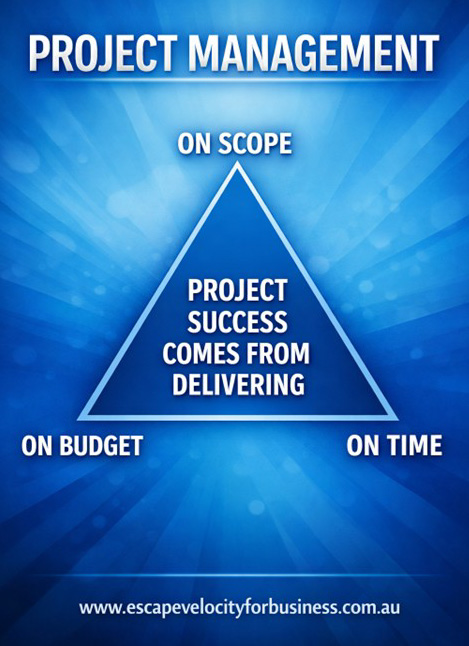
People tend to lose sight of the very basics of project management and will argue until to cows come home about why a particular project has run off the rails.
For any project to be delivered successfully, it must be delivered ON SCOPE, ON BUDGET AND ON TIME.
Once any one of these factors has drifted away from the original target, the likelihood is that one or both of the other two factors will be off target, or will be very soon.
This very basic rule applies irrespective of the size or complexity of any project.
This is also why it is so incredibly important to get the scope of any project clearly defined before work starts.
That is not to say that the scope of a project can’t be changed once work commences, but when that happens, the impact on both the budget and time must be considered.
Scoping documents should consider what-if scenarios. What will happen if key staff become unwell and unavailable? If there is a global pandemic or contaminated ground is found where you were planning to build a road tunnel. What are the contingency plans, and who pays for whatever additional work is required?
Getting Projects Back On-Track
Getting a project back on track often involves returning to the original scope document or agreement to review all work done to date and identify any work done beyond the scope. Also, considering what unexpected delays or costs have occurred.
Examining project schedules and available resources. Developing a culture of NO SURPRISES.

Selected Projects
- Recovered a project that an Industrial Automation company was delivering to a well-known brewery. The project had gone off the rails and had lost $600,000 in today’s money and it was only half completed. On completion, the project delivered a small profit for the Industrial Automation company whilst maintaining a positive relationship with the customer. Success was due to building a professional relationship with senior staff at the brewery and being prepared to share all financial information about the project. Then, proposing options to move forward that addressed the concerns of both parties.
- Resolved a situation where a baggage handling system vendor could not get closure on a project at one of Australia’s largest international airports. The project was 95% complete, and the vendor had made very little margin, but the airport refused to sign off on the completion. They kept sighting various deficiencies, many of which the vendor had resolved. The problem was that there was no definitive list of deficiencies or completed change orders during the project. The vendor had not demonstrated to the airport that the deficiencies had been resolved or that the change orders had been completed. Success resulted from clearly defining and demonstrating all completed work by an agreed date.
- Using IT contractors, implemented separate ERP Service and Project Management modules for an international technology company, enhancing productivity, profitability and customer service. This initiative was guided by a strategic approach to leadership in project execution.
- Turned around the culture of an Engineering division, which the US parent company was considering closing. From an internally focused group struggling to survive to a customer-centric team capable of winning business. Then 40% growth in one year. These results clearly stemmed from leadership that was both strategic and adaptive.